
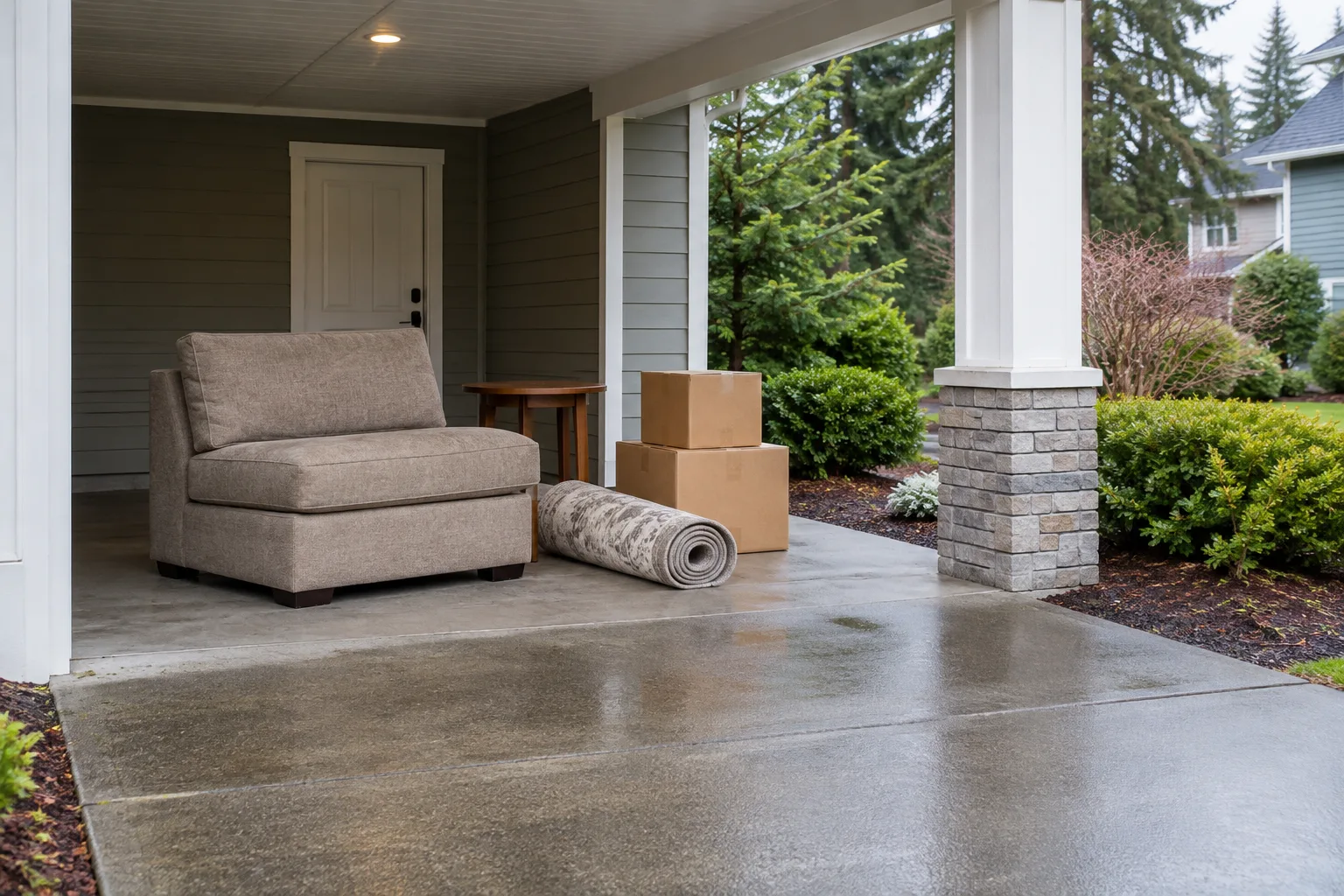
You do not need to haul everything to the curb before a full-service junk pickup. The most useful preparation is an accurate item list, a few wide photos, and a clear description of how the crew will reach the material.
Start with a useful item list
List items in plain language. “One three-seat sofa, two dining chairs, six moving boxes, one broken flat-screen TV” is more useful than “about half a truck.” The list helps the team think about volume, weight, handling, and disposal before arrival.
For a mixed pile, group the list by type:
- Furniture and mattresses
- Boxed household items
- Appliances
- Televisions, computers, and monitors
- Yard debris or clean wood
- Paint, chemicals, batteries, propane cylinders, tires, or other special items
Take one wide photo that shows the full pile, then add close photos only for labels, damage, or unusual construction. If the items are in several rooms, take one wide photo per area. Do not arrange a dangerous stack just to fit everything into one image.
Describe the access before the estimate
Access can change the amount of labor more than the number of objects. Mention stairs, elevators, narrow doorways, long hallways, steep drives, low branches, limited parking, gates, and the distance between the items and the loading area.
| Detail | What to send | Why it helps |
|---|---|---|
| Stairs | Number of flights and any tight landings | Helps plan labor and carrying route |
| Parking | Driveway, street space, restrictions, or distance | Shows how far items must travel |
| Large furniture | Approximate dimensions and doorway width | Flags disassembly or route questions |
| Heavy items | Material and location | Helps determine equipment and service fit |
Clear ordinary trip hazards from the path, but do not move a heavy object just to make it easier to describe. Photos of the item in place and the route out are enough for the first conversation.
Separate special materials
Do not hide paint, chemicals, batteries, fuel, propane cylinders, ammunition, medical sharps, or leaking containers inside boxes of household clutter. Keep uncertain material separate and identify it before scheduling. The team may need to decline it or point you to a specific local program.
Electronics and refrigerant appliances should also be listed separately. Washington’s E-Cycle program covers televisions, computers, laptops, monitors, tablets, e-readers, and portable DVD players for eligible users at approved collection sites, but home pickup can still carry a service charge. Refrigerators, freezers, and air conditioners use different handling routes.
Day-of checklist
- Remove valuables, cash, keys, medications, documents, and personal data devices.
- Mark or physically separate everything that must stay.
- Keep pets and children away from the working path.
- Unlock gates and arrange necessary building access.
- Do not wet down, compact, or overfill boxes.
- Have an authorized adult available to confirm the final scope.
If new items are added after the estimate, point them out before loading starts. A changed item list can change the price or require a different disposal plan.
Questions worth asking a provider
- Does the estimate include labor, loading, hauling, and ordinary disposal?
- Which items need a surcharge or separate handling?
- Can the team remove items from inside, and are stairs included?
- What happens if the actual volume or material differs from the description?
- Which items cannot be accepted?
For Bothell service, call or text (425) 948-9656 or email the item list and photos to ruffremovalco@gmail.com.
Source check: Washington State Department of Ecology, E-Cycle Washington. Retrieved September 16, 2026; applies statewide. Program and facility rules can change, so verify before drop-off.