
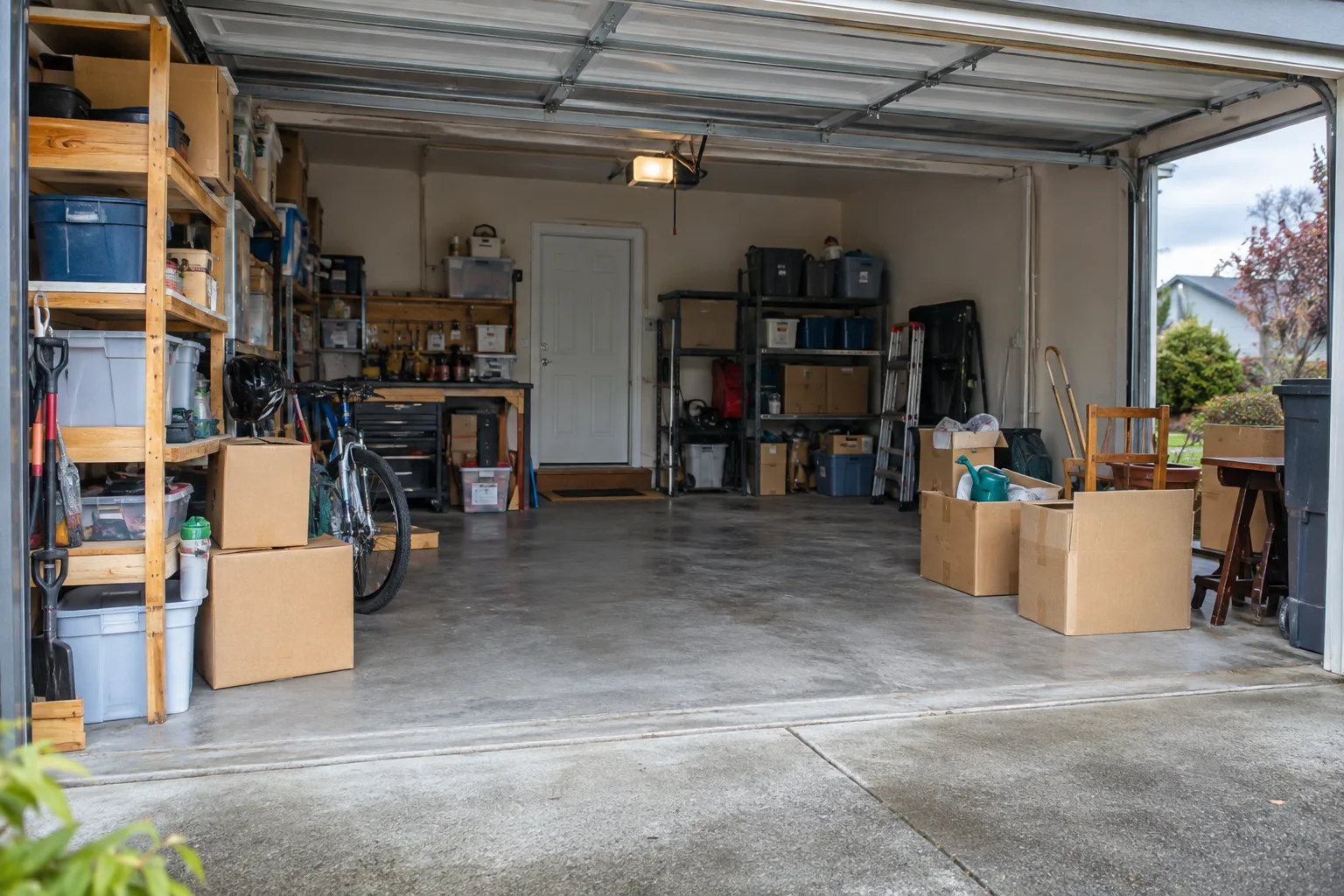
The fastest garage cleanout starts with four decisions: keep, remove, special handling, and undecided. You do not need a color-coded storage system. You need a safe walkway and a pile the removal team can understand.
First pass: remove what should never enter the pile
Before sorting ordinary clutter, pull out cash, keys, titles, tax records, medications, firearms or ammunition, family photos, backup drives, and anything with personal data. Check every drawer and container you plan to remove.
Then scan for leaks, corrosion, swelling batteries, broken fluorescent bulbs, unlabeled chemicals, fuel, pesticides, paint, propane cylinders, and medical sharps. Do not open, pour, combine, or repackage unknown products. Keep them upright, away from children and pets, and tell the removal provider what you found.
Use four zones, not twenty categories
| Zone | What belongs there | Next action |
|---|---|---|
| Keep | Items you use and have a real storage location for | Return them only after the floor and shelves are clear |
| Remove | Ordinary household items approved for pickup | List and photograph them |
| Special handling | Paint, chemicals, batteries, electronics, tires, refrigerant appliances | Confirm an approved route before moving |
| Undecided | A small number of items requiring another person or more information | Set a deadline; do not let this become the whole garage |
Work one shelf, wall, or parking bay at a time. A half-sorted garage is harder to use than a full one because the walkway disappears. Keep at least one clear path from the interior door to the driveway.
Do not mix hazardous products with general junk
Snohomish County directs household hazardous waste to its Household Hazardous Waste Drop-Off Station and publishes separate rules for accepted material. King County also has household hazardous waste facilities and collection options. Bothell crosses county lines, so use the program for the county tied to your address.
A junk removal company may not be permitted or equipped to carry every hazardous product. Ask before assuming “junk” includes chemicals, fuels, pesticides, sharps, or unknown liquids.
Measure the job without guessing truck fractions
Take wide photos from the garage door and the back wall. Count bulky items separately. For loose boxes, give the rough box count and size. Identify dense materials such as tile, concrete, soil, books, or metal because weight can matter even when the pile looks small.
- Number of bulky furniture pieces
- Approximate box or tote count
- Appliances and electronics listed by type
- Special-handling pile photographed separately
- Anything attached to walls or requiring disassembly
Keep shelves or cabinets on the list if they should go. Do not remove wall-mounted storage or dismantle heavy equipment without the right tools and knowledge.
Finish with access, not decoration
Before pickup, move vehicles, unlock the side gate, and clear small trip hazards. Leave heavy items where they are unless the provider asks otherwise. After removal, sweep the open floor and return keep items by use: frequently used items near the front, seasonal items labeled and higher, and hazardous household products stored according to their labels.
A successful cleanout gives every remaining object a reason and a place. If the garage starts filling again, a quarterly fifteen-minute pass is easier than another weekend-scale reset.
Source check: Snohomish County household hazardous waste guidance and King County Hazardous Waste Management Program. Retrieved September 16, 2026. Use the county program that applies to your address and verify current acceptance rules.